
At the same time, some sources highlight potential risks associated with whole grains. So which foods should we choose, and how much should we eat? Both Hungarian and international dietary guidelines recommend including whole grains in our diets, and they play an even more important role for people with insulin resistance or diabetes.
Whole grain or sourdough?
Refined flour contains only the endosperm, the part of the grain that is rich in starch and protein. Whole-grain flour also contains the germ and bran. These parts of the grain provide valuable fibre, vitamins, minerals and other bioactive compounds. “Whole grain” therefore describes what a flour or bread contains.
Sourdough, on the other hand, refers to a fermentation process in which lactic acid bacteria and yeasts act on the dough. These microorganisms, and the conditions they create, bring about changes that may make the finished bread easier to digest and certain minerals easier for the body to absorb. This can be particularly beneficial in whole-grain bread. The two terms are not alternatives: a bread can be both whole grain and sourdough.
What are the benefits of whole grains?
Whole grains contribute to our daily fibre intake. Their insoluble fibre, found mainly in the bran, supports bowel function. Eating whole-grain products regularly may help prevent constipation. It is best to increase fibre intake gradually and drink enough fluids, especially water, as you do so.
Whole-grain products are generally slower-digesting sources of carbohydrate. Choosing them can lead to a slower, more gradual rise in blood sugar after a meal. This may help reduce the risk of diabetes and cardiovascular disease.
Alongside fibre, the bran and germ provide a range of vitamins and minerals, including B vitamins (particularly B1 and B3), magnesium and vitamin E, which is found in the germ.
Which foods should we choose?
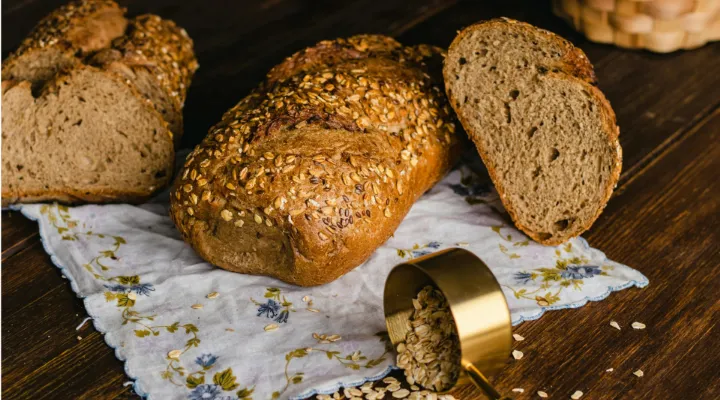
Bread is an obvious place to start. Its colour, however, is not a reliable guide to its ingredients: a loaf may owe its brown colour to barley malt rather than whole-grain flour or rye. A good choice is a bread that lists whole-grain flour or rye flour first among its ingredients, indicating that it makes up a substantial proportion of the product. Whole-grain, rye and purple wheat breads are all options.
Seeded breads are tasty and provide additional fibre, vitamins, minerals and fatty acids. Their seeds can also increase the bread’s fat and calorie content.
Think beyond sandwiches, too. You can vary your side dishes with durum wheat pasta, bulgur, pearl barley, brown rice, millet, buckwheat, quinoa or sorghum. Oats contain a type of fibre called beta-glucan, which can help maintain healthy cholesterol levels.
Whole-grain versions of biscuits, tortillas and baked goods are also available. When baking, try replacing at least half the flour with wholemeal flour. For muesli, look for varieties made with whole grains such as oats or spelt.
How often should we eat whole-grain foods?
Of the three daily servings of grains recommended for adults, at least one should be whole grain. The recommendation of one whole-grain serving a day also applies to children aged four and over.
It is worth introducing younger children to foods made with wholemeal flour, but offering them once every two days is sufficient. This helps avoid an excessively high fibre intake and its possible effects on nutrient absorption. For people with insulin resistance or diabetes, whole grains should play an even greater role in the diet.
Are there any risks associated with whole grains?
A diet that is too high in fibre can cause difficulties with bowel movements and bloating, and may interfere with the absorption of certain nutrients. The outer layers of grains contain compounds sometimes called antinutrients, such as phytates and lectins, which can reduce the absorption of vitamins and minerals. At normal levels of consumption, however, this is generally not a cause for concern. Preparation methods such as soaking, sourdough fermentation and cooking can also substantially reduce the amounts of these compounds.
Another concern sometimes raised is that whole grains may contain higher levels of harmful toxins, such as aflatoxins, produced by microorganisms that grow on grains. EU law sets detailed limits for potentially harmful substances, while the Hungarian food safety system continually monitors compliance. Products that fail to meet the requirements are recalled, and fines may be imposed.
For some people, a higher fibre intake can worsen symptoms or aggravate an existing condition. If you have a digestive disorder, it is important to consider your condition and individual tolerance. A dietitian can help you decide which foods to include in your diet and how best to introduce them.
- dietetics30
- pediatrics24
- diet23
- RMC Dental Center17
- zsuzsanna kókai11
- internal medicine11
- dentistry11
- pediatric dentistry9
- Dr Kinga Jókay8
- sport7
- coronavirus6
- screening6
- covid6
- urology6
- obstetrics gynecology6
- prevention5
- cardiology5
- allergy5
- psychology5
- dental hygiene5
- Kinga Jókay M.D4
- infection4
- gastroenterology4
- menopause4
- screenings3
- Flu shot3
- Flu3
- dermatology3
- women's screening3
- Dr Nóra Gullai2
- infectious disase medicine2
- Ear-Nose-Throat2
- Same Day Surgery Center2
- heat stroke2
- endocrinology2
- Dr Tímea Baló2
- allergen immunotherapy2
- Adrienne Nagy M.D.2
- Fetal Medicine Center2
- pediatric urology2
- flu season2
- meningitis2
- gynecologist2
- Ophthalmologist2
- Headache Clinic2
- Dr Eszter Bodnár2
- headache2
- menopause program2
- invisalign2
- diabetology2
- cardiovascular disease1
- diabetes1
- hydration1
- hematology1
- iron1
- Imre Bodó M.D.1
- nutritional disorder1
- lyme disease1
- gynecologic oncology surgery1
- first trimester screening1



Our related doctors

Any questions before booking an appointment?
If you are unsure which doctor to see or what examination you require, we are here to help!
Simply request a free callback from one of our colleagues, who will help you find the right specialist based on your specific issue.