

As winter arrives, parents are faced with a series of questions: Is my child dressed warmly enough? Will they get cold outside? And is it safe to travel by car on cold days? The good news is that by following a few simple rules, your infants and children can enjoy the frosty outdoors.
Layered clothing is important both in the stroller and in the car seat
A general guideline is to dress children in one more layer than what adults find comfortable before going for a winter walk. When sitting in a stroller, children move less, so they can cool down more easily.
Layered clothing makes it possible to adjust outfits to the current weather and environment. Hats, gloves, and warm socks are essential, as they significantly help retain body heat. An insulated bunting and footmuff for the stroller can also be very useful, as it helps keep babies and toddlers warm.
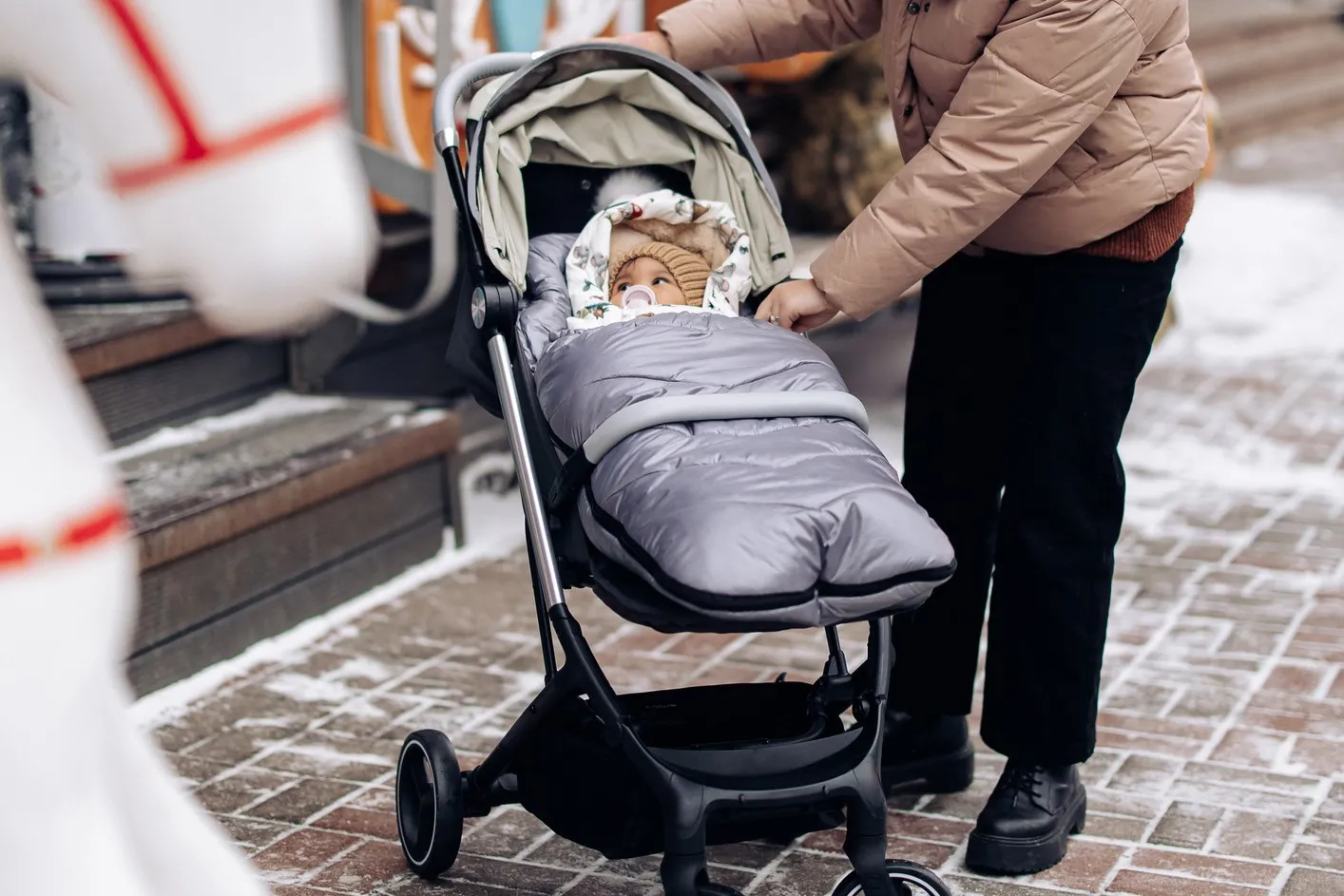
Protect your child against frostbite
Fingers, toes, ears, and the nose are especially sensitive to cold, so these areas require extra attention. Before heading out, always check that they are properly covered. Please use mittens (which provide better protection than gloves) and two pairs of socks.
If, despite your best efforts, you notice numbness, loss of sensation, or red, white, gray, or purple discoloration of the skin; it is important to act immediately.
- Move to a warm, sheltered place and remove any wet clothing.
- Gently and gradually warm the affected body part (for example with lukewarm water or body heat). Avoid rubbing the skin, do not use hot water or radiators to rewarm. If there is no immediately available source of heat, place the affected fingers or toes in your armpit.
- If the affected area does not regain sensation after reaching normal body temperature, blisters appear, or severe pain occurs, seek medical attention as soon as possible.
Quick and careful intervention can significantly reduce the risk of serious and long-term complications.
Traveling by car in cold weather
Before setting off, preheat the vehicle. Dress the child in layers, but do not put them in a thick, padded coat while they are in the car seat. Bulky clothing can prevent the safety harness from fitting snugly against the child’s body, reducing the protective effectiveness of the car seat. In the event of sudden braking or a collision, a child may even slip out of the seat if their outer clothing is too thick or “puffy.” It is better to place a warm blanket over the fastened safety harness, keeping the child warm without compromising safety.
It is also a good idea to keep a blanket, a change of dry clothes, a hat, and gloves in the car. In an emergency or during a longer wait, these items can help prevent getting chilled.
Cold weather alone is not a reason to give up outdoor activities. With proper clothing, exercise in the fresh winter air does wonders for lifting your spirits and supporting good sleep. Make winter walks become a pleasant experience for the whole family.
- dietetics25
- pediatrics24
- diet18
- RMC Dental Center15
- internal medicine11
- dentistry9
- Dr Kinga Jókay8
- pediatric dentistry8
- sport7
- zsuzsanna kókai6
- coronavirus6
- screening6
- covid6
- urology6
- obstetrics gynecology6
- prevention5
- cardiology5
- allergy5
- psychology5
- dental hygiene5
- infection4
- gastroenterology4
- menopause4
- screenings3
- Kinga Jókay M.D3
- Flu shot3
- Flu3
- women's screening3
- Dr Nóra Gullai2
- infectious disase medicine2
- Ear-Nose-Throat2
- Same Day Surgery Center2
- heat stroke2
- endocrinology2
- Dr Tímea Baló2
- allergen immunotherapy2
- Adrienne Nagy M.D.2
- Fetal Medicine Center2
- pediatric urology2
- flu season2
- meningitis2
- dermatology2
- gynecologist2
- Ophthalmologist2
- Headache Clinic2
- Dr Eszter Bodnár2
- headache2
- menopause program2
- invisalign2
- diabetology2
- cardiovascular disease1
- diabetes1
- hydration1
- hematology1
- iron1
- Imre Bodó M.D.1
- nutritional disorder1
- lyme disease1
- gynecologic oncology surgery1
- first trimester screening1
Our related doctors






Any questions before booking an appointment?
If you are unsure which doctor to see or what examination you require, we are here to help!
Simply request a free callback from one of our colleagues, who will help you find the right specialist based on your specific issue.